As Category Reaches ‘Inflection Point,’ Yerba Madre Revamps RTDs, Expands in C-Stores
Article by Martín Caballero – Feb 4 at 9:05 am

It’s time again for the annual question: will 2026 be the inflection point for Yerba mate?
For RTD category leader Yerba Madre, the answer to that question is no, because it already happened last year. Under a revamped leadership team led by CEO Ben Mand, its strategic distribution pivot produced immediate results: distribution grew 35%, the brand became the number one natural tea at Kroger, and retail doors passed 45,000 nationwide.
Behind that momentum, this year the California-based company is looking to press its advantage with a slate of new releases. From on-trend seasonal flavors to an unsweetened Regenerative Organic Certified SKU, Yerba Madre is looking to break through everywhere this year.
“We’re not borrowing relevance from coffee, tea or energy. We are working on defining a new category that stands alone, and I think you can see that through the innovation,” said Jennifer Brush, VP of Product Innovation & Brand at Yerba Madre.
Despite the further push into flavors and line extensions, much of Yerba Madre’s attention is going back towards claiming the plant itself.
For decades, Yerba Madre (then Guayaki) had the category to itself, serving as many U.S. consumers’ introduction to the space. Yet the rise of omnichannel direct competitors, like Drink Weird and Mateina, and mate’s adoption as a core ingredient for natural energy drinks (from brands like Daytrip, CLEAN Cause and Brew Dr. Kombucha) has created more noise around the category and has encouraged Yerba Madre to “be disciplined on innovation,” Brush told us.
“My goal is to ensure that we focus very clearly on the core functional benefit and the plant — really making sure that consumers understand that it’s different, that there’s no crash,” Brush said. “We want to make sure everyone knows what yerba mate is and what it does, whether it is sparkling or still.”
With that in mind, the brand is putting the spotlight back on the plant with the launch of an unsweetened original flavor in its 15.5 oz. can line, the brand’s first RTD to feature the Regenerative Organic Certified (ROC) seal. Consumers have been asking for the flavor, Brush said, creating an opportunity for the brand to highlight the regenerative agriculture practices it has long employed and to “bring that message on a national scale.” The ultimate goal is for Yerba Madre’s complete product family to achieve ROC status. That ambition is currently limited by supply chains.
Responsible sourcing and stewardship have been cornerstones of the brand since its inception as Guayaki, with the next chapter being the launch of an industry-first Shade-Grown Yerba Mate seal that will debut on loose-leaf bags this year.
“I think as part of our historic leadership in regenerative agriculture as a business over 30 years, we feel that responsibility to bring that message to consumers,” Brush said.
That long-term vision is being balanced by an accelerated pipeline for new products, a platform tested with last year’s release of the brand’s first seasonal flavor, Watermelody, at select Albertsons, Gelson’s, H-E-B and Sprouts stores last fall. Its success means the SKU will be rolled out as a permanent flavor this year, with the “swicy” inspired Mango Fuego teed up for March through May as the seasonal release for 2026.
When Original Unsweetened eventually reaches convenience stores — likely next year — Yerba Madre will have a complete lineup of no sugar, low-sugar and full-sugar drinks in the set. That speaks to the brand’s consumers’ preferences: they’re more amenable to occasionally dabbling in low-calorie, sugar-sweetened beverages, Brush said, if it means avoiding some of the artificial sweeteners and additives in next-gen, sugar-free energy drinks.
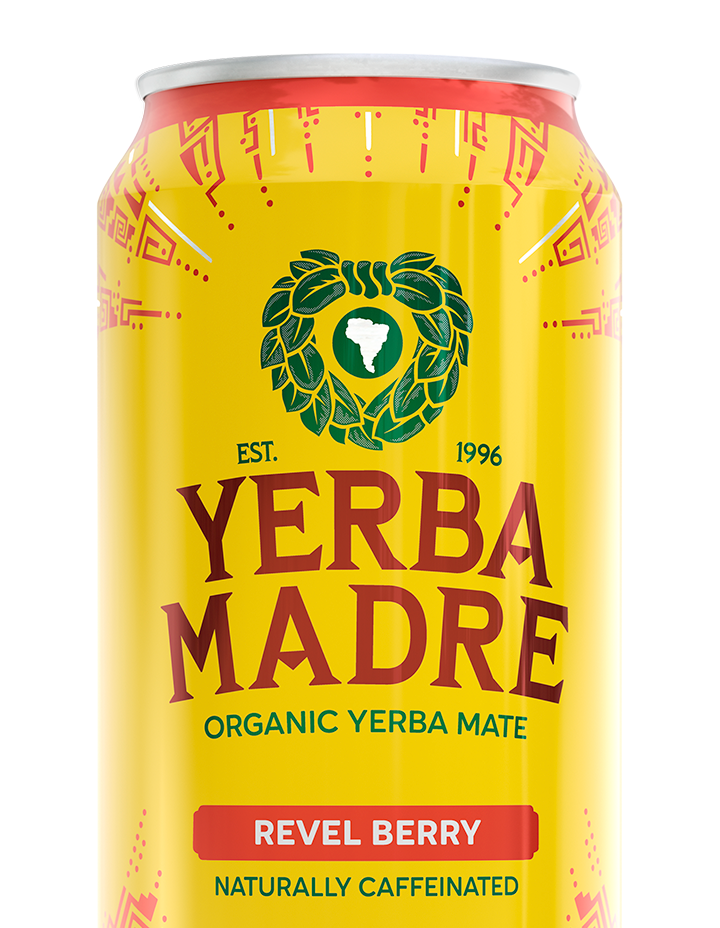
With low-sugar (2 grams of sugar and 20 calories per 15.5 oz. can) driving the majority of brand growth, that line is expanding with a new flavor (Passionfruit Coconut) and a revamped version of Enlightened Mint, touted by the brand as the number one velocity SKU in RTD tea across all measured trade channels.
“Those 30 calories are worth that clean label for these consumers,” she noted.
Yerba Madre’s roster expansion has underscored the need to give each line a clearly defined identity within its offerings, including visually. The Sparkling line has been redesigned, bringing color cues to indicate flavor and adding bubbles to signal its positioning as a refreshment beverage. Compared to the other lines, Sparkling – with 15 to 19 grams of sugar per 12 oz. can, about 70 calories – is about connection and socializing, Brush said, ticking boxes for sober partying and celebratory occasions that are distinct from the non-carbonated line. The caffeine content across each SKU has been standardized to 115mg per can, or about 10mg caffeine per fluid ounce.
Yerba Madre’s growing product range is aimed at serving the distinct needs of various retail channels, but also signals its increasing focus on convenience.
Over the past two years, starting prior to its rebrand, the company has made a concerted effort to grow its presence in c-stores; thanks to wide placements for its 15.5 oz. cans at 7-Eleven and QuikTrip, the segment now represents over 40% of Yerba Madre’s total business, according to Chief Commercial Officer Brian Bousley. In the channel, Yerba Madre came in third in dollar velocity over the past 52 weeks, trailing only Red Bull and Monster.
The next step is launching retailer exclusive LTOs: Cherry Sublime will enter West Coast 7-Eleven stores, while Chevron’s ExtraMile and Jacksons Food Stores will be the small-format partners for Strawberry Kiwi (also going to Walmart). If those tests go well, the SKUs may go into wide release later.
That innovation is what the tea category needs, Bousley argued, and the data suggests he may be right. The total category declined nearly 2% last year, per Circana, with most of the growth coming from rising sub-$100 million brands like Liquid Death, Ryl Tea and Just Ice Tea. Yerba Madre was the rare exception, growing around 17% (over $240 million) during that time.
The company is hoping that trend goes even further this summer on the back of the FIFA World Cup, co-hosted by Mexico, Canada and the United States. Global superstars like Lionel Messi and his teammates on reigning champions Argentina have helped drive yerba mate’s awareness during prior tournaments, and, similar to other emerging RTD brands, Yerba Madre is aiming to exploit those connections by going deeper into football (soccer) culture. That includes recruiting LA FC striker Jeremy Ebobisse and bringing back NWSL stars Casey Phair and Madison Hammond as athlete partners this year.
“We’ve kind of the only brand on the c-store shelf [in yerba mate],” said Bousley. “We have a solid base, and now we’ll start to build on it.”
Essential Reads
1/3